Ming Tombs: Complete Guide to Beijing's Imperial Necropolis
Complete guide to Beijing's Ming Tombs — Changling, Dingling's underground palace, Sacred Way, combo tickets, and half-day vs full-day routes.
~16 min readUpdated Mar 2026
🏛️ 13 Imperial Tombs, One Valley
🌍 UNESCO World Heritage
⛏️ Only Excavated Ming Tomb
🌲 120+ km² Royal Necropolis
Hours & tickets
PeakApr – Oct
8:30 – 18:00
Off-peakNov – Mar
8:30 – 17:00
¥30–60 per site
¥98 combo (4 sites)
Full breakdown in Tickets & Hours · Students half price · Over-60 & under-6 free
Good to know
🏛️
13 tombs, 3 open. Changling, Dingling and Zhaoling + Sacred Way.
⛏️
Only excavated Ming tomb. Dingling — descend 27 m into the underground palace.
🚇
~50 km from central Beijing. Changping Line metro + shuttle; or Bus 872 from Deshengmen.
🌍
UNESCO World Heritage. Half day for 2 sites; full day for all 4.
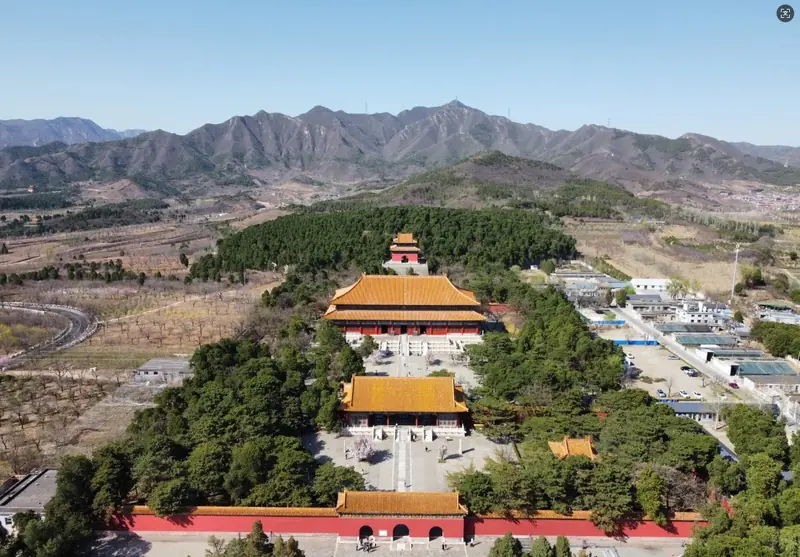
Fifty kilometers northwest of central Beijing, at the foot of Tianshou Mountain (天寿山), thirteen Ming dynasty emperors rest in a valley they chose for eternity. This 120+ km² imperial necropolis is one of the largest royal burial complexes on earth and a core component of the UNESCO-listed "Imperial Tombs of the Ming and Qing Dynasties." Most visitors come to Beijing for the Forbidden City and the Great Wall — the Ming Tombs get skipped. That's a missed opportunity: if the Forbidden City shows how emperors ruled, the Ming Tombs show how they faced eternity — feng shui, architecture, and the narrative of power, all frozen in stone.

Why the Ming Tombs Matter
The Ming Tombs are not a single monument — they are an entire imperial valley planned across 230 years. After Emperor Yongle (朱棣) selected the Tianshou Mountain site in 1409, every subsequent Ming emperor was buried here — eventually forming 13 imperial tombs and 7 consort burial grounds spread across the valley.
This "one valley, one dynasty" approach is extraordinarily rare worldwide. Egypt's Valley of the Kings held rulers from multiple dynasties across scattered rock-cut chambers; the Ming Tombs represent a single dynasty's unified plan, from site selection to the final burial, sustained over two centuries. The feng shui logic behind the valley's selection — why this mountain, how the landscape channels energy — is covered in the "What Most Visitors Miss" section below.
For foreign visitors, this site completes the other half of Beijing's imperial story: the Forbidden City is where power was exercised; the Ming Tombs are where it came to rest. The same emperors who issued decrees from the golden throne all ended up in this valley.
What's Open
Only 3 of the 13 tombs are currently open to visitors — Changling (长陵), Dingling (定陵), and Zhaoling (昭陵) — along with a 7-kilometer Sacred Way (神路). The remaining 10 tombs are walled off, but you can spot their Ming Towers (明楼) and burial mounds from the main road. This "visit three, see ten from afar" setup is part of what makes the Ming Tombs unique: you're always inside a complete imperial landscape, not looking at one isolated structure.
Tickets, Hours & Combo Deals
Individual vs Combo Tickets
| Site | Peak (Apr 1 – Oct 31) | Off-peak (Nov 1 – Mar 31) |
|---|---|---|
| Changling | ¥45 | ¥30 |
| Dingling | ¥60 | ¥40 |
| Zhaoling | ¥30 | ¥20 |
| Sacred Way | ¥30 | ¥20 |
| Combo (all four) | ¥98 | ¥98 |
Half-price tickets apply to students aged 6–18 and full-time university students up to 25 (with valid ID). Seniors over 60 and children under 6 (or shorter than 1.2 m) enter free.
During peak season the combo saves ¥67 over buying all four individually (¥165 vs ¥98); during off-peak the saving drops to about ¥12. If you only have half a day and plan to see just two sites, individual tickets are cheaper. See "Half-Day & Full-Day Routes" below for specifics.
Opening Hours
| Season | Opens | Last Ticket | Closes |
|---|---|---|---|
| Peak (Apr–Oct) | 8:30 | 17:30 | 18:00 |
| Off-peak (Nov–Mar) | 8:30 | 16:30 | 17:00 |
Last ticket sales are 30 minutes before closing. Dingling's underground palace takes at least 30–40 minutes from entrance to exit — arrive before last ticket time. Confirm hours on the official "明十三陵" WeChat mini-program before you go.
How to Buy Tickets

On-site ticket windows accept cash and mobile payment. You can also pre-book through the official WeChat mini-program (search "明十三陵") using your passport number. On peak-season weekends, buying online a day ahead avoids queues.
Passport Booking
Foreign visitors can purchase tickets with a passport number at both the mini-program and on-site windows — no Chinese ID card needed. Trip.com also offers Ming Tombs day tours, though these typically bundle lunch and other stops with less flexibility.
Getting There from Central Beijing
The Ming Tombs sit in Changping District (昌平区), roughly 50 km from downtown. Public transport reaches the area, but requires a transfer.
← swipe to compare all options →
Metro + Shuttle
Recommended
- ✓Xishankou → scenic shuttle to all sites
- ✓Alt: Nanshao → Bus Chang-67 (昌67路) for Dingling/Zhaoling
- —~1 hr metro + 20–40 min connecting bus
~¥10
Changping Line (昌平线)
Transfer at Xishankou (西山口站) or Nanshao (南邵站)
Direct Bus 872
- ✓Stops near Sacred Way and Dingling en route
- ✓No transfers needed — sit and ride
- —1.5–2 hours total
~¥12
Deshengmen (德胜门) near Jishuitan Station (积水潭站)
Direct to Changling
Taxi / Private Car
- ✓Door-to-door, ~1–1.5 hours
- ✓Combine with Badaling or Juyongguan
- ✗Most expensive option
¥120–200 one way
Private car ¥600–800/day
Best with Great Wall combo (same direction)
Getting Between Tombs
The three open tombs are not close to each other — Changling to Dingling is about 5 km, too far to walk comfortably. Scenic area shuttle buses connect the sites (~¥10–15 per leg). You can also take a taxi or ride-hail between tombs. Drivers with private cars can park at each tomb's lot (free or ~¥10).
The Sacred Way

The Sacred Way (神路) stretches roughly 7 km from the southern entrance to the tomb area — it's the "overture" to the entire necropolis and the most visually striking part of the experience. The ticketed section runs about 800 meters from the stone archway to the Dragon and Phoenix Gate (龙凤门), but walking the full stretch from the Great Red Gate (大红门) gives a more complete sense of the approach.
📍 Ming Tombs Sacred Way (Google | Amap)Stone Archway & Great Red Gate
At the southern end stands a stone archway (石牌坊) built in 1540 — five openings, six pillars, eleven decorative roofs — one of the largest surviving stone memorial arches in China. Continue north about 10 minutes past a dismounting stele (碑, inscribed with an order for officials to dismount here), and you reach the Great Red Gate (大红门), the formal entrance to the entire necropolis. The vermilion walls aren't spectacular on their own, but they mark the boundary between the living world and imperial sacred ground.
Stele Pavilion

Just beyond the Great Red Gate, a square pavilion shelters a 6-meter stele mounted on a massive stone tortoise (赑屃, bixi). The inscription records the achievements of Emperor Yongle, the first ruler buried here. Four white marble ornamental columns (华表) stand at the pavilion's corners — fine examples of Ming-era stone carving.
Stone Figures
This is the heart of the Sacred Way. Lining both sides are 12 pairs (24 statues) of stone animals and 6 pairs (12 statues) of stone officials, stretching about 800 meters. The animals include lions, xiezhi (獬豸, a mythical creature said to distinguish right from wrong), camels, elephants, qilin (麒麟), and horses — each species represented by two pairs: one standing, one kneeling, symbolizing day-and-night guardianship. The human figures — civil officials, military officers, and meritorious ministers — stand about 3 meters tall, flanking the path in silent attendance.

Photography tip: Early morning (before 8:30) and late afternoon offer the best light — sidelighting carves strong shadows into the stone figures. In winter, a dusting of snow over the stone animals produces one of the most photogenic scenes at the entire site.
Walking Direction
South to north (stone archway toward the Dragon and Phoenix Gate) follows the ancient approach direction and feels most ceremonial. But if you're arriving by bus from Xishankou Station, the bus stop is near the north end — walking south to north works too, you'll just need to double back or grab a taxi at the end.
The ticketed section takes about 40–60 minutes including photography. Schedule it for the beginning or end of your day to avoid the midday sun.
Changling, Dingling & Zhaoling
Three tombs are currently open, each with a distinct draw. Quick selection framework:
| Tomb | Main Draw | Time Needed | Best For |
|---|---|---|---|
| Changling | Largest tomb; Ling'en Hall (nanmu timber hall) | 1–1.5 hrs | Architecture and imperial scale |
| Dingling | Only excavated underground palace — descend 27 m | 1–1.5 hrs | Archaeology and subterranean exploration |
| Zhaoling | Most fully restored; fewest crowds | 45 min – 1 hr | Quiet experience, understanding tomb layout |

Each tomb has a distinct draw — pick based on your time and interests. See the detailed sections below.
Changling — Yongle's Final Palace

Changling is the largest and highest-ranking of the thirteen tombs. It holds Emperor Yongle (朱棣, 1360–1424), the third Ming emperor and the founder of this necropolis — the same ruler who commissioned the Forbidden City, moved the capital to Beijing, and sent Zheng He (郑和) on his maritime expeditions.
The Ling'en Hall (祾恩殿) is the reason to visit Changling, and the single most impressive structure across all thirteen tombs. The hall spans nine bays wide (roughly 66.75 m) and five bays deep, supported by 60 golden nanmu (金丝楠木) timber columns — the central 32 columns each exceed 1 meter in diameter, with the thickest measuring 1.124 m. This is one of the largest surviving nanmu timber halls in China. For comparison, the Hall of Supreme Harmony in the Forbidden City is similar in scale, but its columns were replaced during Qing-dynasty restorations — Changling's are 600-year-old originals.

Step inside and let your eyes adjust: the ceiling paintings remain legible after six centuries, and the natural grain of the nanmu wood gives the entire hall a deep, warm amber tone. A seated statue of Emperor Yongle and a small exhibition of tomb artifacts occupy the center.
Architecture Bonus
Walk past the Ling'en Hall to the Ming Tower (明楼) and burial mound (宝城) behind it — you can look back along the tomb's central axis and see the same front-to-back, symmetrical layout used in the Forbidden City. Changling's underground palace has never been excavated; the emperor's coffin remains sealed beneath the mound.
Dingling — 27 Meters Underground

Dingling is the only archaeologically excavated tomb among the thirteen — and one of very few imperial tombs in China where visitors can actually enter the underground palace. Its occupant is Emperor Wanli (朱翊钧, 1563–1620), the longest-reigning Ming emperor (48 years). In 1956, archaeologists dug for over a year before finding two massive stone doors 27 meters underground, revealing a five-chamber palace covering 1,195 m².
What you'll see underground: A long stone corridor descends through the front, middle, and rear chambers.

The rear chamber is the most striking — three white marble coffin platforms holding replica coffins of Emperor Wanli and his two empresses, and massive blue-and-white porcelain jars once used as "eternal lamps" (万年灯). The precision of the stonework — vaulted ceilings, tight-fitting doors, all without beams or pillars — remains remarkable after 500 years.
Underground Palace Tips
The underground palace stays at 15–18°C year-round — noticeably cool in summer, so bring a light jacket. The descent involves stairs and sloped passages; surfaces can be slippery. Allow 30–40 minutes for the full circuit. Photography is allowed but flash and tripods are prohibited — verify current policy on arrival.
Zhaoling — The Quiet, Complete Tomb

Zhaoling draws the fewest visitors of the three open tombs. It holds Emperor Longqing (朱载坖, 1537–1572), who reigned just six years. Zhaoling underwent two major restorations (1987–1992 and 2016–2019), and every major structure has been restored — making it the most architecturally complete of the three open tombs.
The reason to visit Zhaoling isn't a single showpiece — it's the chance to walk through a complete Ming-dynasty tomb layout from outermost gate to innermost burial mound, with every courtyard's function clearly legible: gate, hall, side halls, Ming Tower, burial mound.
If the crowds at Changling or Dingling are wearing you down, Zhaoling barely has a queue. On weekdays, you may have the entire courtyard to yourself and a handful of local retirees taking a stroll.
📍 Zhaoling Tomb (Google | Amap)Half-Day & Full-Day Routes
Half-Day (3–4 Hours)
Option A
Architecture Focus
- ✓Sacred Way (1 hr) → Changling (1–1.5 hrs)
- ✓Imperial architecture and feng shui layout
- ✗Skips the underground palace
~2.5–3 hours
Individual tickets cheaper than combo
Option B
Archaeology Focus
- ✓Dingling (1–1.5 hrs) → Sacred Way (1 hr)
- ✓Underground palace and excavation story
- ✗Skips Changling's nanmu hall
~2.5–3 hours
Individual tickets cheaper than combo
A half day covers two sites — individual tickets will be cheaper than the combo.
Full Day (5–7 Hours)
- Sacred Way— 1 hr — stone archway, stele pavilion, 36 guardian figures
- Changling⭐— 1–1.5 hrs — Ling'en Hall and 60 golden nanmu columns
- Lunch— ~45 min — nongjiale near the Changling parking lot
- Dingling⭐— 1–1.5 hrs — descend 27 m into the underground palace
- Zhaoling— 45 min — the quietest tomb, complete Ming-era layout
A full day covers all four sites and justifies the combo ticket. Grab lunch at a farmhouse restaurant near Changling (see Food section below), then head to Dingling and Zhaoling in the afternoon.
Can You Combine With the Great Wall in One Day?
Technically yes, but not recommended. Badaling and the Ming Tombs are in the same direction (both northwest of Beijing), and many tour groups bundle them into a day trip. But for independent travelers on public transport, each site needs half a day — by the time you factor in travel and lunch, you'll be rushing through both.
If you truly have only one day: A private car (¥600–800/day) is the only workable option — go to the Great Wall at opening to beat crowds, then drive to the Ming Tombs in the afternoon for Dingling or Changling. But you'll miss the Sacred Way and the other two tombs.
Food, Weather & Practical Tips
What to Eat
Dining options inside the Ming Tombs scenic area are very limited — don't expect a good meal here. Small shops near each tomb entrance sell instant noodles, snacks, and bottled water. A handful of nongjiale (农家乐, rural farmhouse restaurants) near the Changling parking lot serve basic stir-fries and noodles for about ¥40–60 per person — quality varies.
- Bring your own food and plenty of water (especially in summer)
- For a full-day visit, lunch at a nongjiale near Changling is the most practical option
- Save the real meal for when you return to the city — Changping District has decent local restaurants, but they're still a drive from the scenic area
Stairs & Physical Demands
The Ming Tombs are far less strenuous than the Great Wall, but a full day adds up:
- Dingling underground palace — about 60 steps down to 27 m depth, then back up. Handrails but steep.
- Changling — flat terrain, accessible to all ages. About 800 m from entrance to burial mound.
- Zhaoling — flat throughout, shortest distance of the three.
- Sacred Way — ticketed section ~800 m, flat ground.
Full-day total: Roughly 12,000–15,000 steps. Comfortable walking shoes are sufficient.
Best Seasons
| Season | Temperature | Experience |
|---|---|---|
| Spring (Mar–May) | 10–25°C | Best overall. Cypress and pine trees keep the air fresh; soft light |
| Summer (Jun–Aug) | 25–38°C | Hot with limited shade. Sunscreen and 2L+ water are non-negotiable |
| Autumn (Sep–Nov) | 8–22°C | Excellent. Ginkgo and autumn cypress colors are highly photogenic |
| Winter (Dec–Feb) | -8–5°C | Very few visitors; quiet but cold. Snow dusting on the Sacred Way stone figures is spectacular |
Avoid: Golden Week (Oct 1–7) and Labor Day (May 1–5) — tour group numbers spike and the Dingling underground palace entrance can have queues exceeding one hour.
Tour Group Peak Hours
Tour buses typically arrive between 10:00–12:00 and 13:30–15:00. Reaching your first site before 9:00 AM or entering after 15:30 lets you dodge most groups.
Start With Dingling
Tour groups follow a standard Changling → Dingling sequence, arriving at Changling first in the morning. If your full-day route starts at Dingling (arrive at opening), the underground palace will be nearly empty — by the time you emerge, the groups are just pulling in. Then head to Changling for lunch; the afternoon crowd there will have thinned too.
What to Wear
- Summer — sun hat, breathable clothing, 2L+ water
- Winter — warm coat and gloves; the valley funnels wind and feels colder than downtown
- Spring/Autumn — light jacket or windbreaker
- Bring a long-sleeved layer for Dingling's underground palace — noticeably cooler than the surface
What Most Visitors Miss
The Valley's Feng Shui Logic
Most visitors focus on whichever single tomb is in front of them and miss the most impressive thing about the Ming Tombs — the valley as a unified landscape plan.
Stand at the southern end of the Sacred Way and look north: Tianshou Mountain's main peak faces you directly, the Sacred Way pointing straight toward its slopes. The thirteen tombs fan out along ridgelines on either side of the main peak, like the ribs of an opening fan. The entire complex sits with mountains behind, water in front, and ridges embracing it from left and right — the ideal "wind-gathering, energy-collecting" (藏风聚气) configuration in Chinese feng shui.
When Emperor Yongle selected the site, his feng shui master Liao Junqing (廖均卿) surveyed mountains across the Beijing region before declaring Tianshou Mountain the "auspicious ground for ten thousand years." Each subsequent emperor's burial spot was individually selected by feng shui practitioners within this fan — Changling, closest to the main peak, occupies the most honored position; later, lesser-ranking tombs spread toward the wings.
How to experience it: From the Ming Tower at Changling (or from the southern end of the Sacred Way), look for the orange-red specks of other tombs' Ming Towers scattered among green hills — those are the 10 unopened tombs.

🏛️"Ling" vs "Tomb"
Foreign visitors often think of the Ming Tombs as "thirteen graves," but in Chinese, 陵 and 墓 are fundamentally different. A 墓 is simply a burial place. A 陵 is a full architectural complex — gates, halls, Ming Tower, burial mound — essentially a miniature palace for the afterlife.
👑Siling — The Last Emperor
The smallest of the thirteen is Siling (思陵), burial site of the Chongzhen Emperor (朱由检). In 1644, rebels breached Beijing and the emperor hanged himself on Coal Hill (煤山). He was buried hastily — no grand hall, no stone figures, a site smaller than many officials' tombs. Not open to visitors, but you can spot its diminutive Ming Tower from the main road.
The Dingling Excavation's Aftermath
The 1956–1958 excavation of Dingling had far-reaching consequences. After opening, much of the priceless silk and organic material deteriorated rapidly — 1950s preservation technology couldn't protect textiles exposed to air after centuries underground. Emperor Wanli's golden filigree crown (金丝翼善冠, a remarkably delicate crown woven from fine gold wire, weighing just 826 grams and foldable enough to tuck into a sleeve) was among the few artifacts that survived intact — it's now displayed in the Dingling surface museum.
The excavation directly led to China's policy of not actively excavating any imperial tombs — a rule that remains in force today. This means the underground palace beneath Changling (likely larger and more elaborate than Dingling, given Emperor Yongle's greater resources), the main chamber of Qin Shi Huang's Mausoleum, and Qianling (the joint tomb of Tang Emperor Gaozong and Empress Wu Zetian) all remain sealed. The archaeological consensus in China: wait until the technology catches up.

The golden filigree crown (金丝翼善冠) is the single most remarkable artifact recovered from Dingling. Look closely at the two dragons flanking the crown — each scale is individually soldered from hair-thin gold wire, a technique that has never been fully replicated.
Don't Skip the Surface Museum
If you visit Dingling, don't leave after the underground palace — the surface exhibition hall houses the golden filigree crown and other excavated artifacts. Allow at least 20 minutes.
Frequently Asked Questions
Probably not. A half day covers two sites at most — buying individual tickets for those two is cheaper than the ¥98 combo. The combo pays off when you visit three or more sites.
Beyond This Guide
The Ming Tombs reward visitors who come with context — understanding how the valley was chosen, what each tomb's architecture means, and why only one was ever opened makes every stone figure and timber column land harder.
Tell us your dates and interests — we'll turn them into a day-by-day plan you can actually follow.
Start PlanningFree initial consultation · No commitment
More Beijing Guides
- The Forbidden City: Complete Visitor's Guide — The other half of Beijing's Ming-dynasty story: 980 buildings, advance tickets, three official routes
- Great Wall of China: Which Section to Visit — Badaling, Mutianyu, Jinshanling, and wilder options compared
- Mutianyu Great Wall Guide — Our recommended Wall section for independent travelers
- Peking Duck: The Complete Beijing Guide — Where to eat when you get back to the city
Food Near Beijing

Beijing Food Guide: What to Eat, Where to Go, How to Order
What to eat in Beijing: must-try dishes, neighborhood food maps, restaurants by budget, and how to order, pay, and flag dietary needs in Chinese.

Peking Duck in Beijing: Complete Guide to Ordering and Eating
Everything you need to know about Peking Duck in Beijing: pronunciation, where to eat, what to order, how to eat it, and insider tips to avoid tourist traps.
Planning a trip to Beijing? See our complete Beijing guide →
You Might Also Like

The Forbidden City: Complete Visitor's Guide to Beijing
Complete guide to China's Forbidden City — advance tickets, three official routes, top halls, hidden secrets, food and transport for independent travelers.
Temple of Heaven: Complete Visitor's Guide to Beijing
Complete guide to Beijing's Temple of Heaven — tickets, walking routes, acoustic secrets, morning park life, and hidden gems for independent travelers.

Grand Canal Guide: China's Living 2,500-Year-Old Waterway
Travel China's Grand Canal across five cities — cruises, museums, walking routes, and city-hopping itineraries for independent travelers.

Beijing Bell and Drum Towers: Complete Visitor's Guide
Beijing's Bell and Drum Towers kept the imperial city on schedule for 600 years. Tickets, drum show times, views, and the hutong walk after — all in one guide.
Need Help Planning Your Beijing Trip?
Turn these sights into a real, day-by-day itinerary — we'll handle the logistics so you can focus on the experience.
Personalised Sightseeing Plan
We match attractions, timings, and hidden spots to your travel style and pace.
Full Day-by-Day Itinerary
Every day mapped out — transport between sights, skip-the-queue tips, and backup options.
On-Trip Support
Need a last-minute recommendation or detour? We're on WhatsApp throughout your trip.
See How We Can Help
Free initial consultation · No commitment